What is federated authentication
In the early days of the Internet, your various account information was scattered across different sites and applications, which caused the following problems:
Every time you visited a new site, you had to register a new username and password account.
This account was only stored on this site.
You could not stay logged in at different sites, and user information could not be communicated between different sites.
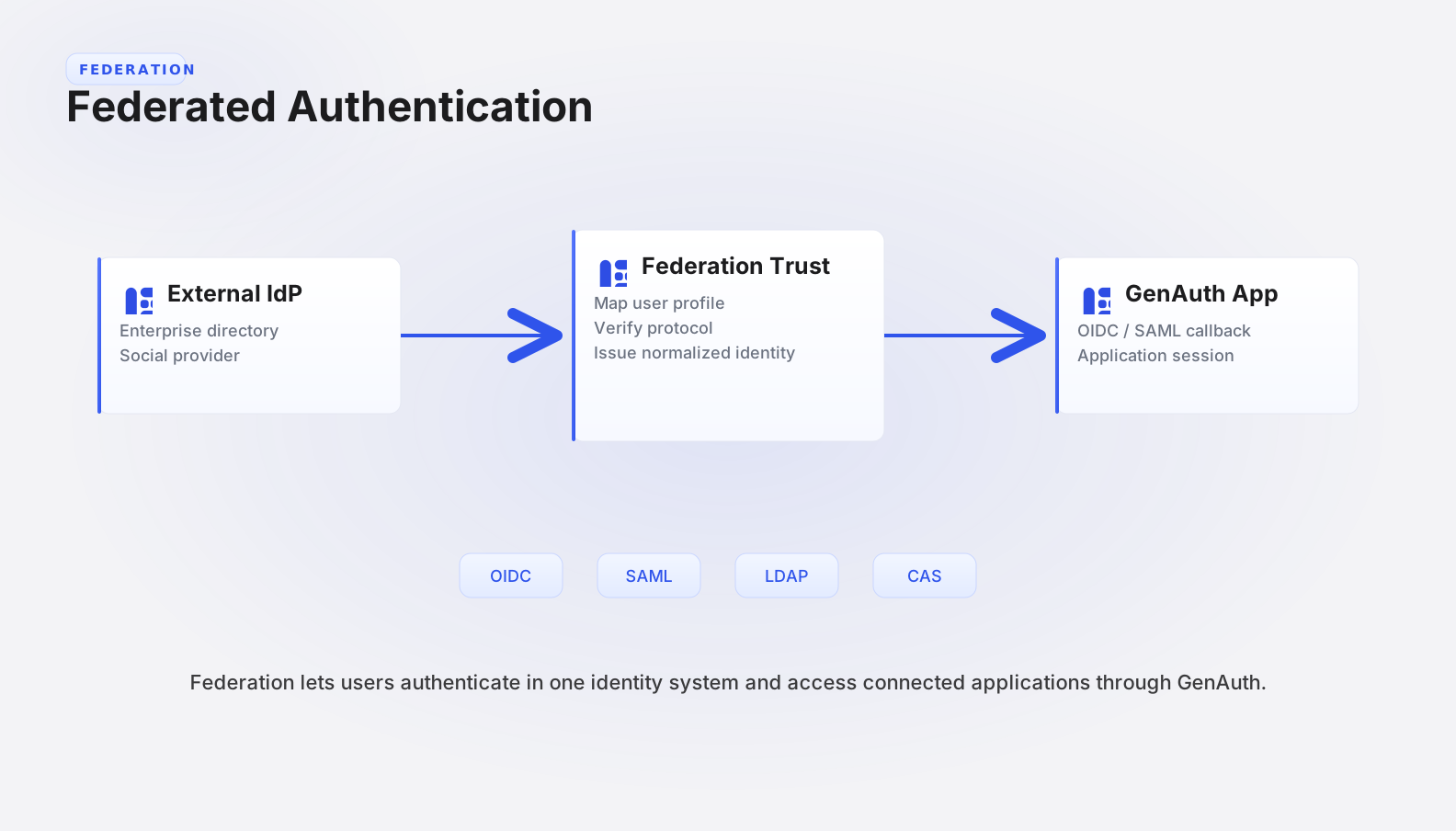
Federated authentication uses standard protocols to unite different identity providers to authenticate users. Federation is a trust relationship between identity providers. Identity providers that have established a federated relationship can pull user information from each other through standard protocols.
Why do we need federated authentication
Federated authentication is a distributed identity authentication. When a user logs in to an identity provider, the user can choose to log in to a federated identity provider that the current identity provider trusts. Users can log in to a new system through federated authentication without having to register an account in the new system every time. For example, many websites now have their own account registration login method, and also have a WeChat scan code direct login method. Among them, WeChat is the identity federation of this website. Users **do not need to fill in **information to register an account, directly use WeChat to log in.
Using federated authentication has the following benefits:
- Users do not have to create a new account every time.
- After accessing federated authentication, users can browse in different organizations and sites.
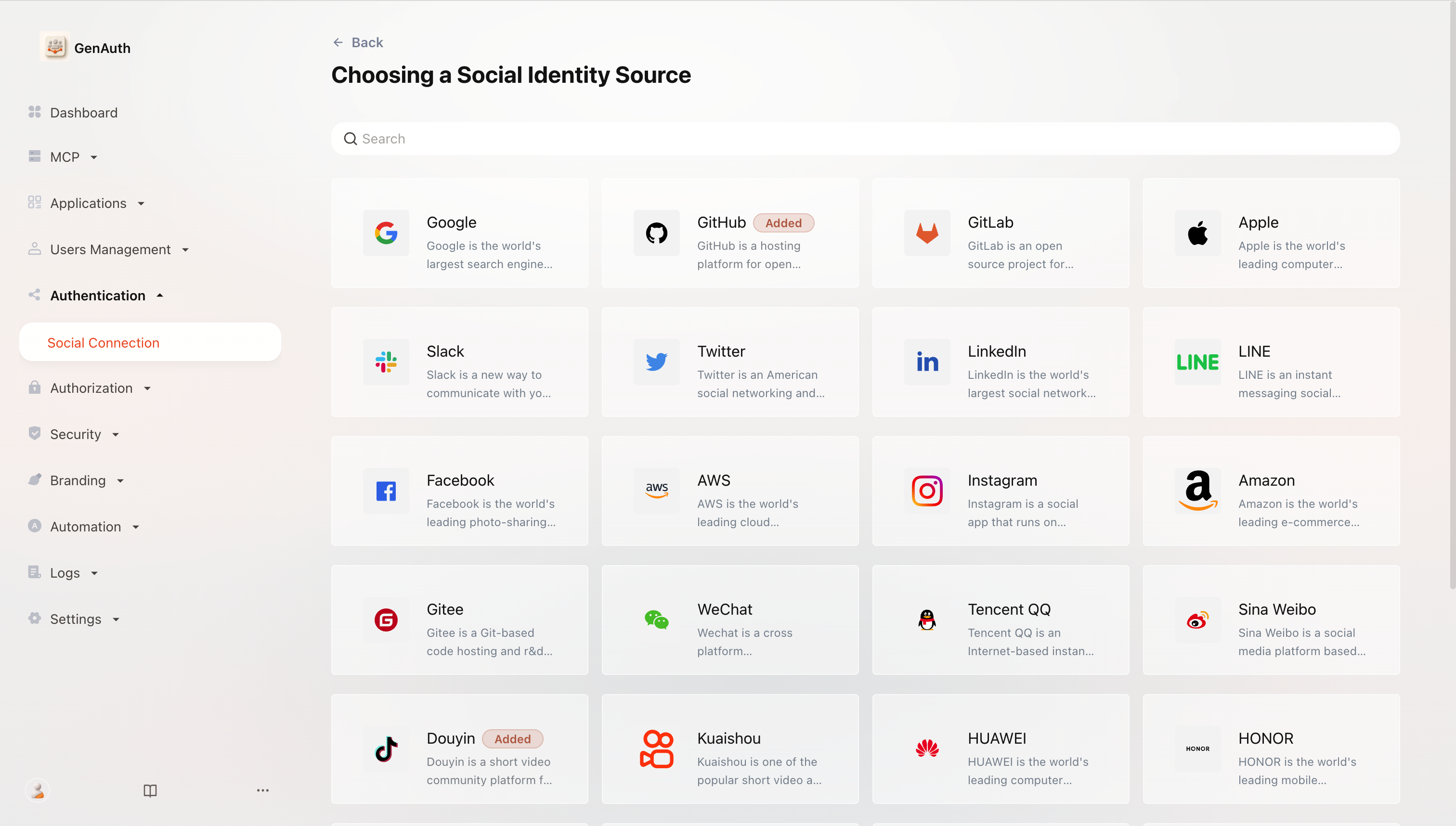
Social identity sources
GenAuth can connect social identity sources such as WeChat, GitHub, and Google, and can also connect internal or third-party account systems through OAuth2-based custom identity sources. After the connection is configured, applications do not need to handle each provider's login differences separately. They receive normalized user identity and authorization results from GenAuth.