SEO 内容规划智能体
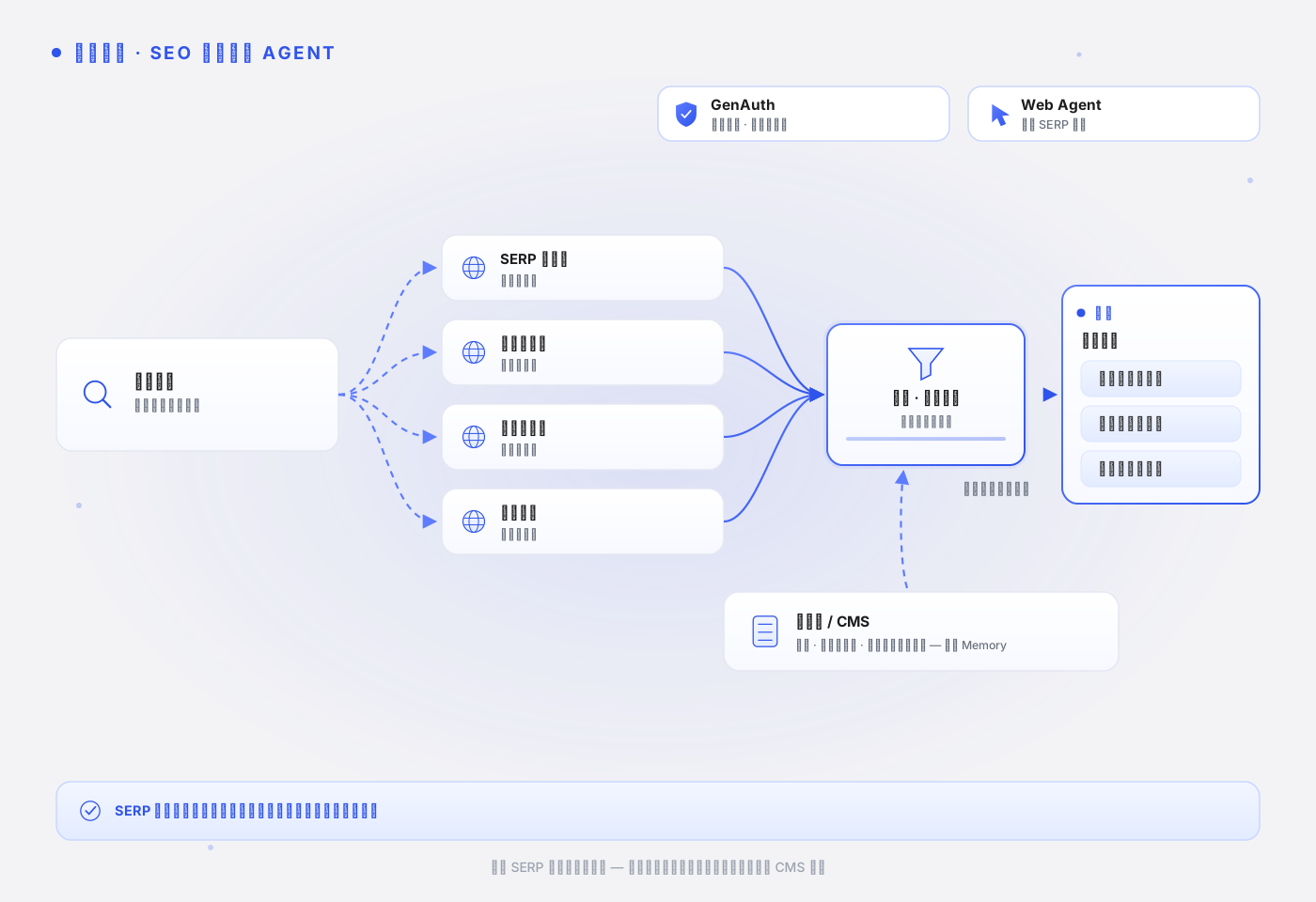
本页说明 SEO 内容规划智能体如何调研公开 SERP 与竞争内容,对照规划库中的已覆盖主题生成选题清单与内容简报。读完本页,你能理解这个场景为什么以 Web Agent 为核心、规划状态为什么放在规划库或 CMS 而不是 Memory,以及什么时候才需要交互式确认。
适用场景
Growth 或 content 团队需要基于公开 SERP、竞品内容和站点自身的规划状态安排下一批内容。SERP 与竞品内容随时在变,人工汇总时容易漏掉已覆盖的主题,也难以持续跟踪竞争内容的变化;选题决策需要每条都有数据或页面来源支撑,否则内容团队无从判断优先级。
典型触发时机:
- 新一季内容日历规划启动,需要基于关键词空白产出选题清单。
- 某组关键词流量下滑,需要调研竞品内容并评估更新优先级。
- 站点进入新主题领域,需要梳理关键词空白和已覆盖主题的边界。
工程挑战
- SERP 数据强时效:排名与内容形态每周在变,采集时间不带上,规划就建立在过期样本上;跨关键词组比较时,各组数据还必须来自相近的时间窗才有可比性。
- 规划状态属于系统而不是记忆:已覆盖主题、内容日历和关键词策略是团队共享、随发布流程更新的结构化状态。把它们放进个人记忆,会和 CMS 的实际发布状态脱节——选题重复或互相冲突就是从这里开始的。
- 证据链:每条选题的优先级依据都要能回溯到具体 SERP 或数据来源,否则内容团队无法判断该不该做,规划评审也无从复核。
模块组合
| 模块 | 角色 | 说明 |
|---|---|---|
| GenAuth | 核心 | 运行时以静默委托签发短时效凭证(所有产品调用必需);本场景默认无需交互式确认,接入登录态或写动作时才升级 interactive。 |
| Web Agent | 核心 | 通过 WebSearch 查询公开 SERP 与竞争内容,逐条保留来源 URL 与采集时间。 |
| GUMem | 不使用 | 关键词策略、已覆盖主题和内容日历是团队共享的规划状态,放在规划库或 CMS 里按版本维护、随发布流程更新;不存在需要跨会话沉淀的个人记忆。 |
何时需要交互式确认
所有产品调用都需要 GenAuth 委托令牌;公开只读场景用静默委托即可。公开 SERP 调研不需要用户逐次确认授权,静默签发的运行时凭证已经提供这个场景需要的约束:凭证短时效、可随时撤销、每次调用都带 grantId 与 auditId 可供追溯。
需要升级为 mode: 'interactive' 交互式确认、让用户在 Qoni Console 明确确认的情况:
- 登录态访问:任务需要进入 Search Console、analytics 或 CMS 后台等登录后才可见的数据——本页示例不涉及;页面表现数据由你的应用自行导出后注入任务。
- 写动作:发布、覆盖或删除 CMS 内容——本场景默认排除,选题清单由内容团队复核后按发布流程执行。
注意:本样例申请 webSearch、doAnything 产品权限。可查询范围等业务边界需要由应用和下游服务配置、校验;产品 scope 和 prompt 中的规则不提供这些细粒度限制。本样例未展示该配置。授权语义见 Delegate Token 与缩权。
工作流程
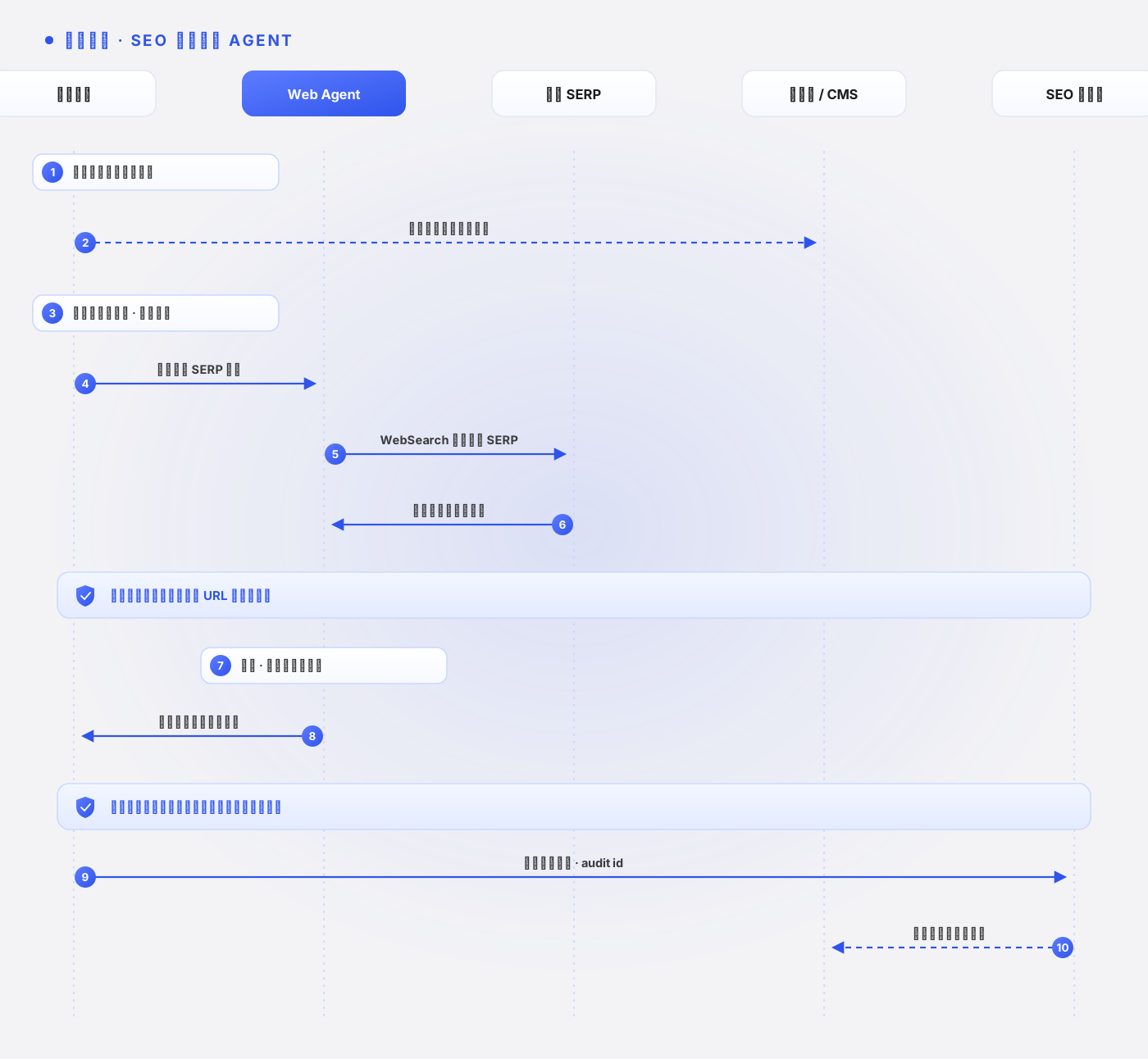
用户选择站点、主题或关键词范围。
应用从规划库或 CMS 读取关键词策略、已覆盖主题和内容日历(带版本),并获取静默运行时凭证。
Web Agent 通过 WebSearch 逐组查询公开 SERP,记录排名页面、内容角度和来源 URL 与采集时间。
检查点:每条 SERP 数据都带来源 URL 与采集时间;跨关键词组比较时确认采集时间窗相近。
Agent 对照已覆盖主题去重、找差距,生成选题清单、内容简报和优先级建议。
检查点:每条选题的优先级依据都应能回溯到具体数据或页面来源;无来源支撑的判断不进交付物。
内容团队复核清单;确认后的选题和日历决策写回规划库或 CMS,作为下一轮规划的输入。
示例代码
本页使用已发布到 npm 的 @qoniai/qoni 0.9.0;下载包附带同版本 SDK,由 npm ci 安装。默认围绕 Firefox 的浏览器隐私主题,结合官方隐私页规划内容选题。公开网页由真实 SDK 读取,业务输入在 scenarios.ts 中标记为 public-demo。
本演示不读取或写入 GUMem;任务输入来自页面清单和明确提供的业务数据。Web Search 先取得 results[] 来源,再由 DoAnything 阅读和分析。接入自己的数据时,用 --input 指定 JSON 文件;需要用户同意时用 --interactive 发起委托,站点登录与交互处理见 Qoni SDK。
下载完整可运行样例,或在文档仓库中执行:
cd examples/qoni
npm ci
npm run case -- seo-content-planner-agent
# 使用自己的输入
npm run case -- seo-content-planner-agent --input /path/to/input.json
运行前设置服务端 QONI_ACCESS_KEY、QONI_SECRET_KEY。QONI_USER_ID 可指定业务已识别的 GenAuth 用户;未指定时,本地演示从绑定用户池取用户。涉及演示 Memory 写入时,程序创建独立用户以避免修改业务用户的偏好。
本场景的真实执行入口:
import { cliOptions } from '../runtime.js'
import { inputFile, runScenario } from '../run-case.js'

// 从真实搜索结果和页面证据中提出内容选题。
const report = await runScenario('seo-content-planner-agent', cliOptions(), inputFile())
// report.items:选题、搜索意图和参考来源;这里不测量关键词搜索量。
// 校验字段:topic, searchIntent, sourceUrl.
console.log(JSON.stringify(report, null, 2))
入口按场景 ID 读取下面这段定义,代码直接引用实际执行的 scenarios.ts,注释按页面语言显示:任务描述、输出字段、来源字段、Web Search 查询(如有)、是否使用 Memory,以及演示输入。执行链会在任务描述后追加输入数据、搜索来源、召回的 Memory 和通用安全约束,拼成最终的任务描述,完整拼装逻辑见下方执行链。
// 从真实搜索结果和页面证据中提出内容选题。
research('seo-content-planner-agent',
  'Use the search results and page content to propose two content topics about Firefox privacy. Return [{topic,searchIntent,sourceUrl}]. These are proposed topics, not measured keyword volume. Do not change any website or CMS.',
  ['topic','searchIntent','sourceUrl'], 'sourceUrl', ['Firefox privacy features Mozilla official'], sample([privacy], { approvedTopics:['browser privacy'], existingTopics:[] })),
这里的 runScenario()、browser()、research() 和 sample() 是样例包的应用函数。实际 SDK 调用都在下面的执行链中:委托与权限查询 → 所需的 Memory/搜索 → 网页任务或监控 → 校验与保存。fields、sourceField 规定本场景如何校验业务输出;它们由应用使用。辅助函数的完整实现在样例包的 runtime.ts 中。
查看实际 SDK 执行链
// 场景构造器:browser() 只调用 DoAnything;research() 先 Web Search 再 DoAnything;sample() 标记 public-demo 演示输入。
const firefox = 'https://www.mozilla.org/en-US/firefox/new/'
const manifesto = 'https://www.mozilla.org/en-US/about/manifesto/'
const privacy = 'https://www.mozilla.org/en-US/privacy/firefox/'
const support = 'https://support.mozilla.org/en-US/kb/get-started-firefox-overview-main-features'
// 演示文案规则会加入 prompt;它们不替代服务端权限或业务规则校验。
const policy = {
  version: 'demo-2026-09',
  approvedClaims: ['Describe only features supported by the cited page.'],
  forbiddenClaims: ['guaranteed security', '100% private', 'unverified pricing or performance'],
  voice: 'concise and warm',
}
const sample = (pages: string[], business: JsonObject = {}): JsonObject => ({
  dataset: 'public-demo', pages, policy, business,
  notice: 'Business records are synthetic demonstration inputs. Referenced websites and SDK execution are real.',
})
// fields 是必填输出字段;sourceField 指定需要校验 URL 格式的字段,memory 控制是否调用 GUMem。
const browser = (id: string, task: string, fields: string[], sourceField: string | undefined, input: JsonObject, memory = false): Scenario => ({
  id, products: ['doAnything'], task, fields, sourceField, input, memory,
})
const research = (id: string, task: string, fields: string[], sourceField: string, queries: string[], input: JsonObject, memory = false): Scenario => ({
  id, products: ['webSearch', 'doAnything'], task, fields, sourceField, queries, input, memory,
})import { QoniScopes, type JsonObject, type RunResult } from '@qoniai/qoni'
import { readFileSync } from 'node:fs'
import { getScenario, type Scenario } from './scenarios.js'
import { appendTrace, checkInputCoverage, cleanupDemoUser, createContext, delegate, handleInteraction, inputEntryCount, isolateDemoUser, object, readWithRetry, renderScreenshot,
save, saveArtifacts, searchHits, settled, settleRun, validateItems, withCleanup, type Context, type Options } from './runtime.js'
export async function runScenario(id: string, options: Options = {}, input?: JsonObject) {
// 按场景 ID 读取真实任务定义;--input 只替换业务输入。
const scenario = getScenario(id)
const data = input ?? scenario.input
if (scenario.memory && data.dataset !== 'public-demo' && options.mode !== 'interactive' && !options.userId && !process.env.QONI_USER_ID) {
throw new Error('Business Memory writes require the current QONI_USER_ID; do not select an arbitrary bound user')
}
const context = await createContext(id, { ...options,
skipUserResolution: scenario.memory && data.dataset === 'public-demo' })
return withCleanup(context, async register => {
register('isolated demonstration user', () => cleanupDemoUser(context))
// 演示偏好写入隔离用户;业务 Memory 必须属于明确识别的当前用户。
if (scenario.memory && data.dataset === 'public-demo') await isolateDemoUser(context)
return await executeScenario(context, scenario, data)
})
}
export async function executeScenario(context: Context, scenario: Scenario, input: JsonObject) {
const pages = input.pages
if (!Array.isArray(pages) || !pages.length || pages.some(page => typeof page !== 'string' || !/^https:\/\//.test(page))) {
throw new Error('Input pages must be an array of HTTPS URLs')
}
if (input.requiresLogin === true && context.mode !== 'interactive') {
throw new Error('Targets that require sign-in need --interactive and user-controlled login')
}
const memoryScopes = scenario.memory
? [QoniScopes.GUMEM_MEMORY_READ, QoniScopes.GUMEM_MEMORY_WRITE, QoniScopes.GUMEM_MESSAGE_WRITE] : []
// delegate() 是应用函数,内部调用 delegateToken / completeDelegateToken。
const grant = await delegate(context, scenario.id, scenario.products, memoryScopes)
// 查询实际授权范围;readWithRetry() 只对可重试的读取错误有限重试。
const { data: tokenInfo } = await readWithRetry(context, 'delegation introspection',
() => context.qoni.genauth.introspectDelegationToken({ token: grant.token }))
const info = object(tokenInfo)
if (info.active !== true) throw new Error('The delegation token is not active')
const audit = { grantId: grant.grantId, auditId: grant.auditId, scopes: info.scope }
let memory: unknown
if (scenario.memory) {
// Session 将本次对话关联到当前用户,sessionId 由应用生成。
const sessionId = `${scenario.id}-${Date.now()}`
await context.qoni.gumem.createSession({
token: grant.token, userId: context.userId, sessionId, title: scenario.id,
})
const preferences = object(input.business ?? {}).confirmedPreferences
if (Array.isArray(preferences) && preferences.length) {
// 只写入业务已经确认的偏好;sync: true 请求同步处理这次写入。
await context.qoni.gumem.addMessages({ token: grant.token, userId: context.userId, sessionId, sync: true,
messages: [{ role: 'user', content: `Confirmed demonstration preferences: ${preferences.join('; ')}` }] })
}
// 召回与任务有关的偏好,作为后续 prompt 的上下文。
memory = (await readWithRetry(context, 'GUMem recall', () => context.qoni.gumem.recall({ token: grant.token, sessionId,
query: 'Confirmed preferences relevant to this task', details: true }))).data
save(context, 'memory.json', { sessionId, context: memory })
if (Array.isArray(preferences) && preferences.length && !preferences.every(value => JSON.stringify(memory).includes(String(value)))) {
throw new Error('Recall did not include the confirmed preferences just written by this demo')
}
}
if (scenario.products.includes('track')) return runMonitor(context, scenario, input, grant.token, audit)
let hits: ReturnType<typeof searchHits> = []
if (scenario.queries) {
// Web Search 返回真实 results[];搜索来源将提供给 DoAnything 阅读。
const search = await context.qoni.webSearch.run({ token: grant.token, prompt: scenario.queries, maxResultsPerQuery: 3 })
save(context, 'search-ref.json', { runId: search.id, audit })
await withCleanup(context, async register => {
register('Web Search run', () => search.cancel('Documentation demonstration cleanup'))
const result = await settleRun(context, search)
save(context, 'search-result.json', result)
settled(result)
hits = searchHits(result.output)
})
}
// 逐项对应输入的场景按输入项数要求条数,其余场景最多两项。
const requiredItems = inputEntryCount(scenario.id, input)
// 拼装场景任务、业务输入、搜索来源和 Memory;这些都是应用约定的上下文。
const prompt = [scenario.task, `Task inputs: ${JSON.stringify(input)}`,
`Search sources: ${JSON.stringify(hits)}`, `Confirmed memory: ${JSON.stringify(memory ?? null)}`,
`Actual collection time: ${new Date().toISOString()}`,
requiredItems === undefined
? 'Inspect the supplied sources. Return at most two items in the requested JSON array, without prose or Markdown.'
: `Inspect the supplied sources. Return exactly ${requiredItems} item${requiredItems === 1 ? '' : 's'} in the requested JSON array, one per input entry, without prose or Markdown.`,
'Keep synthetic demonstration data identified as synthetic. Do not send messages, publish, pay, edit accounts or submit forms.',
input.requiresLogin === true ? 'Request user sign-in through an interaction when required; never enter credentials yourself.' : 'Public demonstration sources only; do not sign in.',
].join('\n\n')
// 使用同一委托启动 Agent;capture 接收服务端交付的截图,不保证每步都有图。
const run = await context.qoni.doAnything.run({ token: grant.token, prompt, capture: { screenshots: true } })
save(context, 'run-ref.json', { runId: run.id, session: run.sessionRef, audit })
let result: RunResult
const trace = (event: { type: string; data: unknown }) => {
context.eventCounts[event.type] = (context.eventCounts[event.type] ?? 0) + 1
if (['progress','message','done'].includes(event.type)) appendTrace(context, event)
if (event.type === 'browserLiveUrlChanged') {
const liveUrl = object(event.data).liveUrl
if (typeof liveUrl === 'string') context.browserUrl = liveUrl
}
}
return withCleanup(context, async register => {
register('DoAnything run', () => run.cancel('Documentation demonstration cleanup'))
if (context.delivery === 'events') {
// --events 实时读取事件;普通交互对象先转换为 SDK 句柄再交给用户处理。
for await (const event of run.events({ signal: AbortSignal.any([context.abort.signal, AbortSignal.timeout(context.timeoutMs)]) })) {
trace(event)
if (event.type === 'screenshot') renderScreenshot(context, event.image)
if (event.type === 'interaction') await handleInteraction(context, run.interactionHandle(event.data))
}
result = await settleRun(context, run)
} else {
// 回调模式在 wait 内接收同一次任务的事件;这里的辅助函数会保存图像和询问用户。
result = await settleRun(context, run, { onEvent: trace,
onScreenshot: (image, index) => renderScreenshot(context, image, index),
onInteraction: interaction => handleInteraction(context, interaction) })
}
save(context, 'result.json', result)
settled(result)
await saveArtifacts(context, result)
if (scenario.id === 'landing-page-audit-agent' && context.screenshots === 0) throw new Error('The landing-page audit did not deliver the requested screenshot')
// 应用校验必填字段和来源 URL 格式;事实准确性仍需业务复核。
const items = validateItems(result.output, scenario.fields, scenario.sourceField)
// 要求逐项对应输入的场景,再核对每个输入项都有对应输出。
checkInputCoverage(scenario.id, items, input)
const report = { scenario: scenario.id, dataset: input.dataset, passed: true, runId: run.id,
status: result.status, items, audit, screenshots: context.screenshots, interactions: context.interactions,
events: context.eventCounts, artifactIds: result.artifacts.map(artifact => artifact.id) }
save(context, 'report.json', report)
return report
})
}
async function runMonitor(context: Context, scenario: Scenario, input: JsonObject, token: string, audit: JsonObject) {
// Track 单独创建 monitor:声明目标、抽取字段并请求每小时调度。
const monitor = await context.qoni.track.create({ token, prompt: scenario.task,
targetUrls: input.pages, extractionSchema: { heading: 'string', source_url: 'string' },
tickInstructions: `Open the target URLs and read the actual visible heading. Return a JSON object with heading and source_url. ${scenario.task}`,
triggerDsl: { on: 'change' }, schedule: { kind: 'interval', intervalSeconds: 3600 } })
save(context, 'monitor-ref.json', { id: monitor.id, audit })
return withCleanup(context, async register => {
register('Track monitor', () => monitor.delete())
const definition = await monitor.get()
save(context, 'monitor-definition.json', definition)
if (object(definition.schedule).intervalSeconds !== 3600) throw new Error('Track did not persist the requested schedule interval')
// 立即运行一次,再读取该 runId 的实际抽取;completed 本身不足以证明取数成功。
const tick = await monitor.runNow()
save(context, 'tick.json', tick)
if (tick.state !== 'completed') throw new Error(`Track execution failed: ${tick.state} / ${tick.error ?? ''}`)
const runId = tick.runId
if (typeof runId !== 'string') throw new Error('Track tick did not return a runId')
const detail = await monitor.run(runId)
save(context, 'tick-detail.json', detail)
if (detail.state !== 'completed' || !detail.extracted || !Object.keys(object(detail.extracted)).length) {
throw new Error('Track did not extract page data')
}
const extracted = object(detail.extracted)
if (typeof extracted.heading !== 'string' || !extracted.heading.trim() ||
typeof extracted.source_url !== 'string' || !/^https:\/\//.test(extracted.source_url)) {
throw new Error('Track extraction is missing a heading or source URL')
}
const normalizeUrl = (value: string) => { const url = new URL(value); url.hash = ''; return url.href.replace(/\/$/, '') }
if (!(input.pages as string[]).some(url => normalizeUrl(url) === normalizeUrl(String(extracted.source_url)))) {
throw new Error('The Track source URL is not a configured target')
}
// 检查暂停/恢复是否保存;withCleanup() 在退出时调用 monitor.delete()。
await monitor.pause()
if ((await monitor.get()).status !== 'paused') throw new Error('Track did not persist the paused state')
await monitor.resume()
if ((await monitor.get()).status !== 'active') throw new Error('Track did not persist the active state')
const report = { scenario: scenario.id, dataset: input.dataset, passed: true, monitorId: monitor.id,
runId, state: detail.state, outcome: detail.outcome, extracted: detail.extracted, audit }
save(context, 'report.json', report)
return report
})
}
export function inputFile(): JsonObject | undefined {
const index = process.argv.indexOf('--input')
return index >= 0 ? object(JSON.parse(readFileSync(process.argv[index + 1], 'utf8'))) : undefined
}结果写入 output/seo-content-planner-agent/report.json。report.items 包含选题、搜索意图和参考来源;这里不测量关键词搜索量,字段为 topic, searchIntent, sourceUrl;audit 保存委托 ID、审计 ID 和实际授权范围,http.json 记录脱敏请求状态。应用解析 DoAnything 输出,并检查必填字段和来源 URL 格式。内容判断仍需业务人员结合原始来源复核。
数据与记忆边界
这个场景涉及四类数据,没有一类属于 GUMem:
- 规划状态:关键词策略、已覆盖主题、内容日历——团队共享的结构化状态,放在规划库或 CMS 里按版本维护,任务时注入,确认后的选题决策也写回这里。
- 业务状态:选题清单、内容简报和 SERP 采集样本——归档供规划评审与复核。
- 审计记录:
grantId与auditId构成的委托与行为链——由 GenAuth 维护。 - 用户 Memory:本场景不使用。如果未来要沉淀某个编辑的个人偏好(例如简报的写作口吻),那才是 GUMem 的位置;团队共享的规划状态不属于个人记忆。
失败处理
| 情况 | 推荐处理 |
|---|---|
| SERP 结果不稳定或抓取失败 | 按失败处理并记录采集时间,不用不完整的样本得出趋势结论。 |
| 关键词组之间采集时间窗差距过大 | 重新采集对齐时间窗后再比较,不混用新旧样本。 |
| 输出条目缺少来源或采集时间 | 应用侧校验直接丢弃该条目,并在清单中标注丢弃数量。 |
| 需要登录才可见的分析数据 | 本任务不访问;由应用另行导出注入,或另行发起交互式委托。 |
生产注意点
不要自动发布或覆盖 CMS 内容:选题清单由内容团队复核后按发布流程执行。对排名和竞品数据要保留来源与采集时间;SERP 数据有时效性,超过合理时间窗的数据应重新采集而不是直接复用。选题和优先级是基于当前数据的建议,不应向用户承诺排名效果。